Leave Your Message

What Is the Most Popular Type of Toys For Boys?

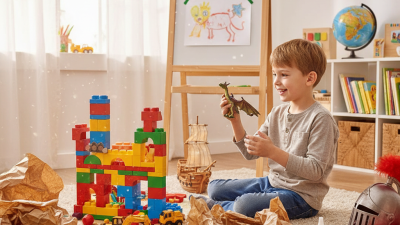
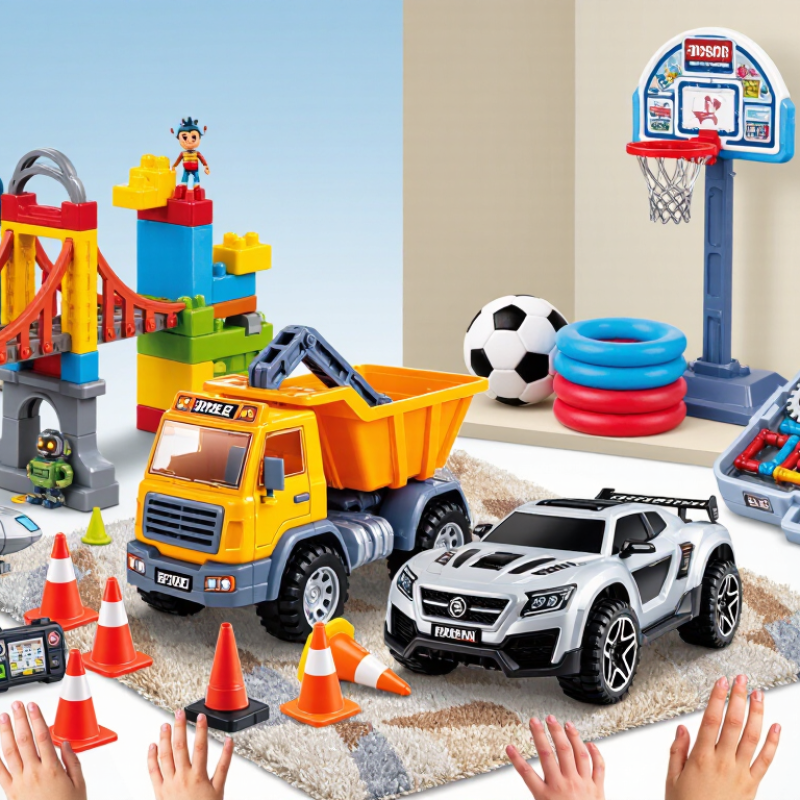
When parents ask, “What is the most popular type of Toys For Boys?” they often expect one simple answer. The real picture is more varied. Action figures, building sets, remote-control vehicles, sports toys, and STEM kits remain strong choices. Their appeal comes from movement, storytelling, problem-solving, and hands-on control. A small construction truck can become a city-builder’s machine on a living-room rug. A magnetic building set can become a bridge, robot, or imperfect spaceship.

Chris Byrne, a veteran toy industry consultant known as The Toy Guy, captures this idea clearly: “The toy is only the invitation; the child creates the play.” His point matters because popularity does not always equal lasting value. A highly advertised toy may attract attention for one week. A simple set of blocks may return to the floor every afternoon. That difference is easy to miss.

Age, personality, culture, and access all shape a child’s preferences. Boys are not a single buying group. Some prefer dinosaurs and dramatic battles. Others choose art supplies, dolls, puzzles, or cooking sets. These choices should not be limited by outdated assumptions. Safety labeling, durable materials, and age-appropriate design also deserve careful review. Small parts can create risks for younger children.

This guide examines the most popular categories of Toys For Boys without treating popularity as proof of quality. It considers play value, durability, learning potential, and real household use. The answer may be less neat than expected. That is probably more honest.
What Is the Most Popular Type of Toys For Boys?

Defining the Most Popular Toy Categories for Boys

What Is the Most Popular Type of Toys For Boys?

Defining the Most Popular Toy Categories for Boys

The most popular toy category for boys is not one fixed group. Preferences change with age, personality, culture, and play opportunities. Building toys remain widely appealing because children can create roads, towers, robots, and imaginary cities. Vehicle toys also attract attention, especially when children enjoy movement, speed, and simple storytelling. Many boys explore action and adventure toys through rescue games, exploration missions, or friendly competition.

Science, technology, engineering, and mathematics toys are another strong category. Puzzles, beginner coding sets, and mechanical models encourage problem-solving through hands-on practice. Outdoor toys, including balls, balance equipment, and flying objects, support coordination and active play. Creative toys should not be overlooked. Drawing tools, costumes, and role-play materials help children express feelings and test different identities. Research on play supports variety, but popularity does not prove that one category suits every child.

Tips: Watch how a child plays before choosing a toy. Look for repeated interests, safe materials, clear age guidance, and room for independent thinking. Open-ended toys often last longer than toys with only one action. Check small parts carefully for younger children. Ask simple questions, such as “What could this become?” A child may surprise you.

A neat category list can mislead. In my experience, a child may ignore a detailed building set but enjoy its storage box as a pretend vehicle. Adults sometimes choose toys based on stereotypes, then miss the child’s real curiosity. The best choice usually combines interest, challenge, and freedom. Even popular categories need thoughtful selection.
What Is the Most Popular Type of Toy for Boys?

Common toy categories ranked by a normalized popularity index (0–100)

Building and construction toys rank highest, followed by vehicles and action figures. Outdoor and sports toys, games and puzzles, and arts and crafts also remain important categories, showing that boys' toy preferences span creative, active, and imaginative play.

Why Action Figures and Building Sets Remain Popular

What Is the Most Popular Type of Toys For Boys?

Action figures and building sets remain popular because they turn play into active storytelling. A child can move a figure across a carpet, create a rescue scene, or invent a new character. Building sets offer a different kind of satisfaction. Pieces become bridges, vehicles, towers, or strange inventions. The result may look imperfect, but that is often part of the fun. From my experience, children stay engaged longer when toys allow changes instead of only one fixed use. Action figures also support social play, while building sets encourage planning, hand control, and simple problem-solving. These benefits depend on the child, though. Not every boy enjoys the same style of play.

Toy safety experts recommend checking age guidance, part size, material quality, and clear instructions. Parents should also observe how a child actually uses the toy. A set designed for building may become a storytelling tool. An action figure may inspire drawing, role-play, or cooperative games. Small details matter. A loose joint, sharp edge, or confusing instruction can quickly reduce interest. My own judgment is not always perfect. Sometimes I choose a complex set, expecting excitement, and see frustration instead.

Tips: Choose toys with flexible uses. Start with a manageable number of pieces. Invite the child to explain the story. Store figures and parts in separate containers. Allow unfinished creations to remain for another day. Relax the rules.

What Is the Most Popular Type of Toys For Boys? - Why Action Figures and Building Sets Remain Popular

Toy Type Typical Age Range Main Play Pattern Skills Commonly Supported Reasons for Continued Popularity Common Purchase Considerations
Action Figures Approximately 4–12 years, with collector-focused versions for older children and adults Role-play, character-based storytelling, collecting, and small-world adventure play Imagination, language development, social negotiation, narrative thinking, and fine-motor control They are easy to start playing with, support open-ended stories, and can be used alone or with playsets and vehicles Durability, movable joints, size, accessory safety, character familiarity, and compatibility with existing toys
Building Sets Approximately 4 years and older, with increasing complexity for older children Following instructions, constructing models, experimenting, rebuilding, and creating original designs Spatial reasoning, planning, problem-solving, persistence, hand-eye coordination, and creativity They offer both structured goals and creative freedom, while allowing children to reuse pieces in many ways Piece size, age guidance, build difficulty, storage, number of parts, instructions, and opportunities for rebuilding
Vehicles and Construction Toys Approximately 2–10 years, depending on size, detail, and mechanism Driving, transporting, building, sorting, rescue scenarios, and simulated real-world tasks Cause-and-effect learning, coordination, motor skills, sequencing, and imaginative role-play The movement is immediately understandable and connects pretend play with familiar machines and occupations Moving parts, material strength, realistic details, noise level, safety, and suitability for indoor or outdoor use
Board Games and Strategy Games Approximately 5 years and older, depending on reading and rule complexity Turn-taking, competition, cooperation, decision-making, and rule-based challenges Counting, memory, communication, strategic thinking, patience, and emotional regulation They create shared family experiences and can be replayed with different outcomes and strategies Player count, playing time, reading requirements, learning curve, cooperation level, and replay value
Sports and Outdoor Toys Approximately 3 years and older, adjusted for equipment size and activity level Throwing, catching, kicking, balancing, racing, and rule-based physical games Gross-motor development, balance, timing, coordination, teamwork, and physical confidence They encourage active play, social interaction, and practice-based improvement away from screens Available space, weather resistance, safety equipment, child size, supervision needs, and number of players
Remote-Controlled and Electronic Toys Approximately 6 years and older, depending on controls and technical complexity Operating, steering, programming, testing, and responding to changing environments Hand-eye coordination, sequencing, troubleshooting, spatial awareness, and basic technology confidence They provide immediate feedback and combine physical control with technology-based exploration Battery requirements, charging time, repairability, control difficulty, operating area, noise, and safety

Note: Age ranges are general guidelines. The most suitable toy depends on a child’s developmental stage, interests, abilities, and supervision needs.

How Age and Development Shape Toy Preferences

What Is the Most Popular Type of Toys For Boys?

How Age and Development Shape Toy Preferences

Popular toys for boys often reflect their stage of development, not biology alone. Toddlers usually choose toys they can push, stack, carry, or repeat. A small vehicle may become a lesson in movement, balance, and cause and effect. They enjoy action.

Around preschool age, pretend-play toys often become more attractive. Children may build roads, rescue scenes, animal homes, or imaginary machines. This play supports language, planning, emotional expression, and early problem-solving. In my experience observing children, open-ended toys produce richer conversations than toys with only one function.

School-age boys may prefer construction sets, sports equipment, puzzles, strategy games, or science activities. These choices can reflect growing coordination, curiosity, and the desire to master a challenge. However, age labels are only guides. A quiet child may love active games, while an energetic child may focus on drawing or building. Preferences also change with friends, family routines, culture, and access.

The “most popular” type is therefore difficult to define. Developmental research supports offering varied play opportunities rather than forcing gender-based choices. I have sometimes assumed that a child wanted competition when he actually wanted cooperation. That mistake matters. Watching how a child uses a toy can reveal more than the toy’s packaging, and adults should remain willing to revise their assumptions.

The Role of Technology in Boys’ Toy Choices

Technology increasingly shapes boys’ toy choices, especially when play includes movement, competition, and problem-solving. In my observation, boys often choose toys that respond to their actions. A vehicle may light up, change direction, or produce realistic sounds. A building set may include sensors or simple coding tasks. These features create quick feedback, which can make play feel active rather than passive.

Technology is not automatically better. Child-development specialists often recommend balancing digital features with hands-on play. A toy that requires building, explaining, or cooperating can support language and spatial skills. Motion-based toys may also encourage children to leave the sofa and move around. However, some electronic toys do too much for the child. When every button creates an instant result, patience and imagination may receive less practice. That concern deserves more attention.

Parents can observe how a boy uses a toy after the excitement fades. Does he invent new challenges, repair mistakes, or play with someone else? These details matter more than flashing lights. Safety guidance should also influence choices, including age suitability, secure battery compartments, and reasonable sound levels. I may sometimes overestimate technology’s appeal because modern toys look impressive. A simple ball, puzzle, or construction kit can still hold attention for hours. The strongest choices often combine digital feedback with physical control, creative freedom, and room for imperfect attempts.

Comparing Popularity Across Cultures and Generations

What Is the Most Popular Type of Toys For Boys?

The honest answer changes across cultures and generations. In many families, construction toys remain popular because children can build roads, towers, machines, or imaginary cities. These toys encourage movement and problem-solving. Parents and teachers often value them because play reveals planning, patience, and flexible thinking. Still, calling them “boys’ toys” is too narrow.

Older generations may remember toy cars, wooden blocks, outdoor balls, and figures from imagined adventures. Today, many boys choose remote-control vehicles, building sets, sports equipment, or digital game systems. Access matters. In some cultures, shared outdoor games are more popular than individual toys. In others, limited space makes compact toys more practical. Household income, advertising, school routines, and local traditions influence these choices. Popularity is not the same as developmental value.

From my observations of children’s play, the most engaging toy often allows a story to change. A vehicle becomes a rescue tool; blocks become a bridge. This pattern appears across ages, although the details differ. Child-development specialists generally encourage varied play, including creative, physical, social, and quiet activities. I may overvalue construction play because I notice its visible results. That limitation deserves attention. Some children prefer dolls, drawing, music, or cooperative games, regardless of gender. At one table, a boy builds a cardboard shop, changes the rules, and invites two friends inside.