What Is a Toy Exporter and How Do Global Buyers Choose One?
A toy exporter is more than a supplier with a catalogue. It is a bridge between factories, distributors, retailers, and children’s everyday experiences. In practice, an exporter manages product selection, production schedules, packaging details, shipping documents, and quality checks. Small mistakes can become expensive delays.
Global buyers usually examine evidence before trusting a new partner. They may request factory photos, sample approvals, test reports, material information, and references from comparable markets. They also compare communication speed, minimum order quantities, lead times, and after-sales support. A reliable exporter explains what it can prove. It does not hide behind polished promises.
The phrase “Exporter Toys” may attract online searches, but keywords alone cannot establish credibility. Buyers need clear answers about age grading, product specifications, batch consistency, and responsible sourcing. They should also confirm that products meet the safety requirements of their destination markets. Requirements vary, and assumptions create risk. A practical evaluation often begins with one sample order, a written inspection plan, and direct questions about corrective action. Look closely. Who checks the toy before shipment? What happens when a sample fails? These questions reveal more than a colorful brochure.
Choosing an exporter is therefore a measured business decision. Experience helps identify realistic lead times and common production problems. Professional knowledge supports better testing and documentation. Authority grows through transparent records, not impressive claims. Trust is earned slowly. Even experienced buyers can miss details when price pressure rises. Careful review keeps the partnership useful, safe, and dependable.
What a Toy Exporter Is and What Services It Provides
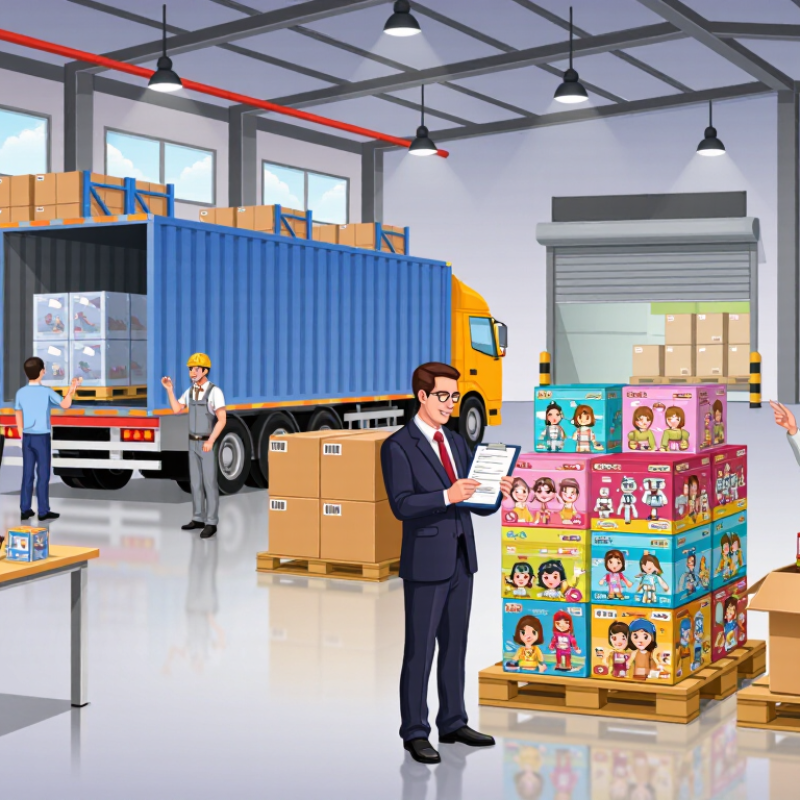
A toy exporter connects manufacturers with buyers in overseas markets. It manages more than shipping finished products. The work often includes product sourcing, sample development, factory communication, quality inspections, packaging, and freight coordination. An experienced exporter can explain material choices, production schedules, carton dimensions, and destination-market safety requirements. Buyers should receive clear quotations, sample photos, test documents, and production updates. Clear records matter. Reliable exporters also check whether paint adheres properly, small parts remain secure, and cartons survive normal handling. These details show practical knowledge, not just sales ability.
Global buyers usually compare exporters through service quality and evidence. They may request a physical sample, an inspection report, and a detailed production timeline. Some exporters can adjust colors, labels, packaging inserts, or order quantities. Others coordinate warehouse loading and provide shipping documents. Communication is equally important. A supplier who answers precise questions can prevent expensive delays. Still, no process is perfect. A sample may look excellent, while bulk production reveals uneven stitching or missing carton marks. Good exporters admit problems quickly and propose documented corrections. Buyers should examine response speed, inspection methods, payment clarity, and after-sales support before choosing a long-term partner. Erotiske
How Toy Exporters Manage Products, Suppliers, and International Orders
A toy exporter does more than ship cartons overseas. It manages product selection, supplier capacity, quality checks, documentation, and buyer communication. Circana reported that global toy sales reached approximately 108.7 billion dollars in 2023, across 12 major markets. Sales still declined 7 percent, making accurate forecasting increasingly important.
Strong exporters begin with a practical product file. It includes material details, age grading, packaging dimensions, test records, and target pricing. They compare several qualified suppliers instead of trusting one factory immediately.
A pre-shipment inspection should check paint finish, loose parts, carton strength, and quantities. Small failures matter. One missing warning label can delay a full container.
International orders also require disciplined logistics. The World Bank’s 2023 Logistics Performance Index assessed 139 economies through customs, infrastructure, tracking, and delivery timeliness. Exporters use these factors when choosing routes and setting realistic arrival dates. They also confirm Incoterms, payment milestones, container loading plans, and destination requirements before production starts.
HS 9503 trade records in the UN Comtrade database help exporters study import demand and compare shipment values across markets. However, trade data can lag behind consumer trends. That weakness deserves attention.
A spreadsheet cannot explain why a buyer suddenly reduces an order. Good exporters ask questions, document changes, and keep backup suppliers ready. Sometimes, the best plan still needs correction.
Which Safety Standards and Certifications Toy Exporters Must Meet
A reliable toy exporter must prove safety before discussing price or delivery speed. Buyers usually check compliance with ASTM F963 in the United States, EN 71 in the European market, and ISO 8124 for broader international trade. These standards address mechanical hazards, flammability, migration of chemicals, noise, and small parts. In the United States, a Children’s Product Certificate is required for regulated products. In Europe, the exporter must support a valid Declaration of Conformity and CE marking. CE is not a laboratory certificate.
The figures explain why careful screening matters. The U.S. Consumer Product Safety Commission reported an estimated 231,000 toy-related injuries involving children under 15 in 2022. The European Commission’s Safety Gate 2023 report listed toys among its most frequently notified product categories, representing about 13% of alerts. Buyers should request recent test reports from ISO/IEC 17025-accredited laboratories, product specifications, material declarations, and production-batch records. A certificate alone proves little if it covers a different model, color, or factory. That mistake still happens.
Tips: Ask for sample-to-report traceability. Confirm the testing date and applicable market. Inspect sharp edges, loose eyes, magnets, batteries, and packaging warnings. Review the exporter’s corrective-action records, not only successful reports. Some suppliers may provide incomplete files, and buyers should treat that as a warning, not an inconvenience. Safety rules also change, so an experienced exporter should monitor regulatory updates and retest when materials or designs change.
Core Toy-Safety Instruments by Export Market
This chart compares the main legal framework and technical standard references commonly reviewed by toy exporters. The count represents named core instruments, not the total number of tests or certification documents required.
Important: Exact obligations depend on the toy’s design, materials, age grading, packaging, and destination. Exporters should verify current requirements with the relevant authority or an accredited testing laboratory.
How Global Buyers Evaluate a Toy Exporter’s Reliability
What Is a Toy Exporter and How Do Global Buyers Choose One?
A reliable toy exporter does more than quote a low unit price. Global buyers examine product consistency, factory capacity, communication, and shipping discipline. Circana’s 2024 global toy market review reported a 7% sales decline across 12 major markets in 2023. Average prices still increased by 1%. This pressure makes predictable supply especially valuable.
Experienced buyers request recent inspection records, material specifications, batch codes, and corrective-action reports. They also compare promised and actual delivery dates across several orders. The World Bank’s 2023 Logistics Performance Index evaluates customs, infrastructure, shipment arrangements, logistics competence, tracking, and timeliness across 139 economies. These factors matter when a shipment contains thousands of small items and one missing carton can delay retail delivery. A serious exporter should explain its backup plan for port congestion, raw-material shortages, and production defects.
Numbers can mislead.
A perfect sample may hide weak process control.
Buyers should visit production areas when possible, or use independent audits and pre-shipment inspections.
They should test packaging, labeling, moving parts, and durability before approving repeat orders. Documentation must remain clear and current. One overlooked revision can create expensive rework. Reliability is built through evidence, not confident promises, and even strong suppliers need regular review.
How to Select the Right Toy Exporter for Long-Term Cooperation
What Is a Toy Exporter and How Do Global Buyers Choose One?
Selecting a toy exporter for long-term cooperation requires more than comparing prices. A dependable exporter understands product safety, age grading, packaging, and international documentation. They should explain their quality process clearly, not hide behind vague promises. Ask for recent samples, factory audit records, and relevant test reports before placing a large order. A sample should show more than attractive colors. Check its stitching, edges, moving parts, labels, and carton strength.
Tips: Visit the production site when possible. Confirm who controls quality there. Ask how defects are recorded and corrected. Request a small trial order before expanding cooperation. Compare the delivered goods with the approved sample, not only the quotation. Clear communication matters, especially when time zones and languages create small misunderstandings.
Long-term partners also provide realistic lead times and early warnings about delays. They respond with evidence, such as updated production photos or inspection records. Payment terms should be documented, and responsibilities should remain clear after shipment.
However, no exporter is perfect. Even experienced buyers sometimes focus too heavily on price and overlook slow corrective action. That mistake can affect retail schedules and customer trust. A stronger evaluation considers consistency across several orders, not one impressive meeting. Look for an exporter willing to discuss problems openly and improve measurable details over time.