Leave Your Message
Sourcing Gift Toys for global buyers demands more than attractive designs and competitive prices. It requires a disciplined view of safety, quality, cultural relevance, and supply reliability. A toy may look perfect in a product photograph, yet feel unsuitable when its packaging reaches a family in another market. Richard Gottlieb, CEO of Global Toy Experts, describes toys as “the tools of childhood.” That perspective changes the buying decision. Each Gift Toys product should support safe, meaningful, and age-appropriate play.
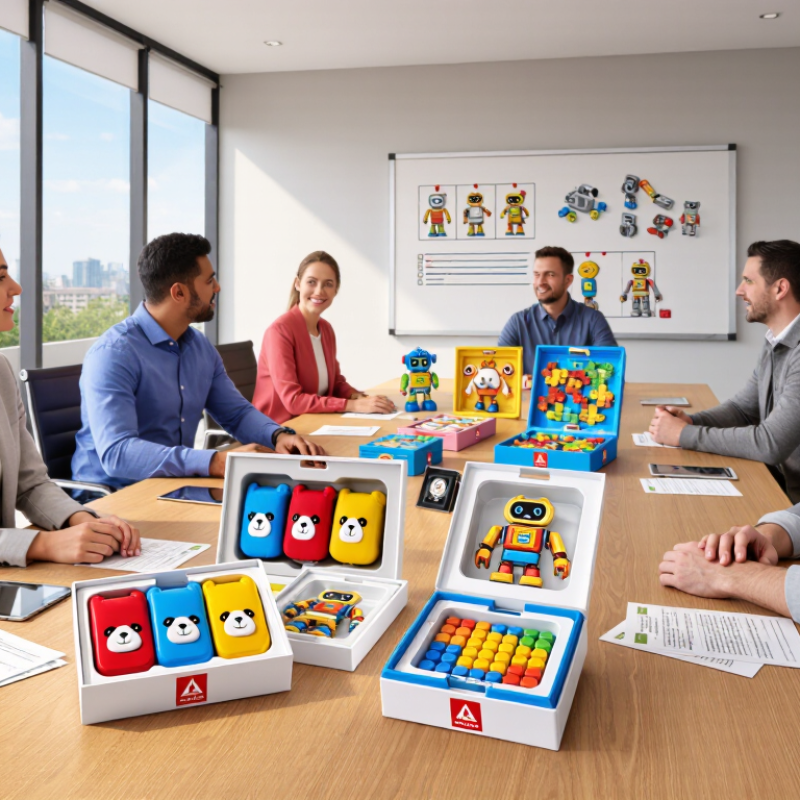
Reliable sourcing begins with clear product specifications. Define materials, dimensions, colors, target ages, packaging requirements, and expected order volumes. Ask potential suppliers for factory profiles, sample records, quality procedures, and independent test reports. A responsible buyer should also examine production conditions, traceability, and communication speed. Small details matter. A loose ribbon, unclear warning label, or fragile box can create expensive problems.
Global buyers must check applicable product-safety and labeling requirements before confirming orders. Requirements can differ between destinations. Professional testing and documented supplier controls reduce avoidable risks, but they cannot replace careful judgment. No sourcing plan is flawless. Samples may hide production variation. Forecasts may also be wrong. That deserves attention.
Strong suppliers welcome questions and explain limitations honestly. They can discuss minimum order quantities, lead times, inspection points, and corrective actions without vague promises. Buyers should compare total cost, not only the factory price. Freight, testing, packaging changes, delays, and rejected units affect the final result. A thoughtful Gift Toys sourcing strategy balances creativity with evidence. It protects children, supports retailers, and builds trust across borders. Sometimes, the safest decision is delaying a launch until the product is truly ready.
How to Source Gift Toys for Global Buyers?
Defining gift toy requirements for international markets starts with a precise product brief. Buyers should specify the target age, gifting occasion, materials, dimensions, colors, and expected retail price. A toy for a birthday party may need bright packaging and easy opening. A holiday gift may require stronger seasonal artwork. Small parts, sharp edges, loose threads, and detachable decorations deserve careful review. Safety expectations vary by destination, so requirements should be checked against current local rules and accredited laboratory testing.
The brief should also describe packaging, labeling, language, and shipping conditions. For example, a gift set may travel through humid ports before reaching a dry warehouse. Moisture-resistant cartons can reduce damage. Labels should show age guidance, material information, care instructions, and responsible importer details where required. Buyers should confirm whether the factory can provide consistent color samples and reliable batch records. Ask for a pre-production sample. Photos alone can hide weak stitching or uneven paint.
Experienced sourcing teams also define order quantities, lead times, inspection points, and acceptable defect limits. A first specification is rarely complete. Early projects often miss display size or regional color preferences. That mistake is avoidable, but not always avoided. Invite local sales staff to review the sample before production. Keep written approvals for artwork, measurements, packaging, and test documents. This creates a traceable process and helps suppliers understand the real market requirement, not just the purchase order.
| Target Market | Typical Gift Occasion | Recommended Age Group | Core Product Requirements | Key Safety and Compliance References | Material and Finish | Packaging Requirements | Sourcing Checkpoints |
|---|---|---|---|---|---|---|---|
| European Union | Birthdays, holidays, tourist gifts, educational occasions | 3–6 years and 6–12 years | Compact products with clear age grading; avoid small detachable parts for children under 36 months; provide multilingual instructions and warnings. | Toy Safety Directive 2009/48/EC; EN 71 series; REACH chemical restrictions; CE marking; General Product Safety Regulation where applicable. | Prefer tested plastics, wood, paperboard, or textile materials. Use secure coatings and avoid accessible sharp edges, loose magnets, and easily removable batteries. | Include importer or responsible-person information, batch identification, age warning, instructions, and required language versions for destination countries. | Confirm mechanical, flammability, migration, and chemical test reports. Check packaging recycling symbols and country-specific labeling needs. |
| United States | Birthdays, Christmas, school rewards, promotional gifting | Under 3 years, 3–8 years, and 8+ years | Strong visual appeal, easy shelf presentation, clear intended-use statement, and age-appropriate design. Products with magnets or button batteries require enhanced controls. | Consumer Product Safety Improvement Act; 16 CFR Part 1250; ASTM F963; applicable rules for small parts, lead, phthalates, magnets, and button-cell batteries. | Use durable materials with controlled lead and phthalate levels. Avoid brittle components and ensure battery compartments require a tool or two independent movements when applicable. | Provide tracking label, manufacturer or importer details, age grading, choking-hazard warning where required, and English-language instructions. | Obtain a Children’s Product Certificate from an accredited laboratory process. Review third-party testing, tracking information, and warning placement before shipment. |
| Canada | Seasonal gifting, family events, educational gifts | 3–6 years and 6–12 years | Bilingual consumer information, practical play value, and robust construction for repeated handling. Avoid designs that can be mistaken for food. | Canada Consumer Product Safety Act; Toys Regulations under the Canada Consumer Product Safety Act; applicable requirements for magnets, lead, and surface coatings. | Select low-odor, non-toxic finishes and durable components. Check accessible cords, elastic parts, sharp points, and detachable accessories. | Use English and French safety information where required. Include age grading, warnings, importer information, and safe-use instructions. | Verify laboratory reports against Canadian limits rather than relying only on United States or European test reports. Review bilingual artwork before mass production. |
| United Kingdom | Birthdays, Christmas, retail gift sets, visitor attractions | 3–8 years and 8+ years | Gift-ready presentation, clear age suitability, and durable construction. Products should remain safe after repeated opening, closing, and normal play. | Toys (Safety) Regulations 2011; applicable designated toy safety standards, including relevant parts of EN 71; UKCA or other accepted conformity route according to current rules. | Use stable plastics, responsibly sourced wood where relevant, and coatings resistant to normal wear. Control loose fibers, sharp edges, and small detachable parts. | Provide English warnings, importer or responsible-person details, batch information, age grading, and conformity markings required for the sales channel. | Check the latest UK conformity and labeling requirements before production because accepted marking routes and transitional provisions can change. |
| Australia and New Zealand | Birthdays, outdoor gifting, school and family occasions | 3–6 years, 6–12 years, and outdoor-use categories | Products should tolerate warmer conditions and active handling. Outdoor toys require particular attention to stability, impact resistance, and entrapment risks. | Applicable mandatory toy safety standards under Australian Consumer Law; relevant AS/NZS ISO 8124 requirements; additional rules for aquatic, projectile, or magnetic products. | Use UV-stable materials for outdoor products and avoid coatings that become sticky or brittle under heat. Control accessible fasteners and flexible parts. | Provide clear English warnings, age grading, assembly instructions, supervision statements, and safe-use information for outdoor or water-related products. | Review heat, UV, impact, and packaging durability. Confirm whether the product falls under a specific mandatory standard before quoting. |
| Japan | Character-free souvenirs, seasonal gifts, educational and craft gifts | 3–6 years and 6–12 years | Compact, tidy, refined products with clear instructions and reliable finishing. Space-efficient packaging is valuable for urban retail and travel purchases. | Applicable Japanese consumer product and toy safety requirements; ST safety mark requirements may apply depending on product category and distribution route. | Favor precise molding, smooth surfaces, low odor, and consistent color. Minimize unnecessary accessories and ensure secure closures. | Provide Japanese-language instructions and warnings, age information, importer details, and appropriate disposal or battery information. | Confirm local labeling, testing, and distributor requirements. Test packaging for humidity, compression, and compact retail display conditions. |
| Gulf Cooperation Council Markets | Religious and cultural festivals, family celebrations, tourist gifting | 3–8 years and family-use gift sets | Use culturally appropriate colors, imagery, and product names. Products should withstand high temperatures during transport and storage. | Applicable national and GCC conformity, product safety, labeling, and customs requirements; verify rules with the importing country and product category. | Select heat-resistant materials and stable adhesives. Avoid finishes that soften, discolor, or release strong odors under elevated temperatures. | Use Arabic and English information where required, including age grading, warnings, importer details, country of origin, and usage instructions. | Validate heat exposure, carton performance, translation accuracy, cultural suitability, and country-specific conformity documentation. |
| Latin America | Birthdays, school rewards, holiday gifting, promotional campaigns | 3–8 years and 8+ years | Affordable, colorful, durable products with simple instructions and strong perceived gift value. Modular or refillable formats can support repeat sales. | Requirements vary by country; commonly involve local toy safety standards, chemical restrictions, labeling rules, and conformity or registration procedures. | Use impact-resistant materials and secure decorations. Avoid small parts for products intended for children under 3 years and control paint or coating migration. | Provide Spanish or Portuguese information as required by the destination country, including warnings, age range, importer details, and country of origin. | Confirm each country separately. Check port-of-entry documentation, local testing acceptance, translation requirements, and carton durability for long-distance shipping. |
| Cross-Market Sourcing Baseline | Multi-country retail, online marketplaces, corporate gifting | Define before quotation | Select one clearly defined age grade, intended use, product size, color range, accessory list, and performance specification before requesting samples or quotations. | Build a market-by-market compliance matrix. Do not assume one test report, marking, warning, or certificate is accepted in every destination. | Specify resin or wood type, coating system, color tolerance, odor limit, hardness, tensile strength, and prohibited substances in the purchase specification. | Define finished dimensions, unit weight, inner-pack quantity, master-carton quantity, drop-test target, barcode position, and packaging language before artwork approval. | Approve a golden sample; conduct pre-production and final inspections; verify test reports, batch traceability, carton markings, and corrective-action procedures. |