Puzzle toys have become increasingly popular among parents looking to enhance their children's cognitive skills. According to a report by the Toy Association, the puzzle toy market is projected to grow by over 8% annually, indicating a rising interest in these educational tools. Experts in child development emphasize the importance of puzzle toys. Dr. Emily Carter, a noted child psychologist, states, “Puzzle toys not only entertain kids but also challenge their minds in unique ways.”
When selecting the right puzzle toys for your kids, consider their age and skill level. Many parents overlook this aspect, leading to frustration rather than engagement. The wrong puzzle can discourage a child. Additionally, safety should be a priority. Not all puzzle toys are created equal, and they can come with hidden risks. Look for materials that are non-toxic and appropriate for your child's age group.
Children learn differently, and a one-size-fits-all approach doesn’t work. Some children may excel with complex puzzles, while others may require simpler options. Keeping this in mind can change the way your child interacts with these toys. Choosing the right puzzle toys should be a thoughtful process, not just an impulse decision.
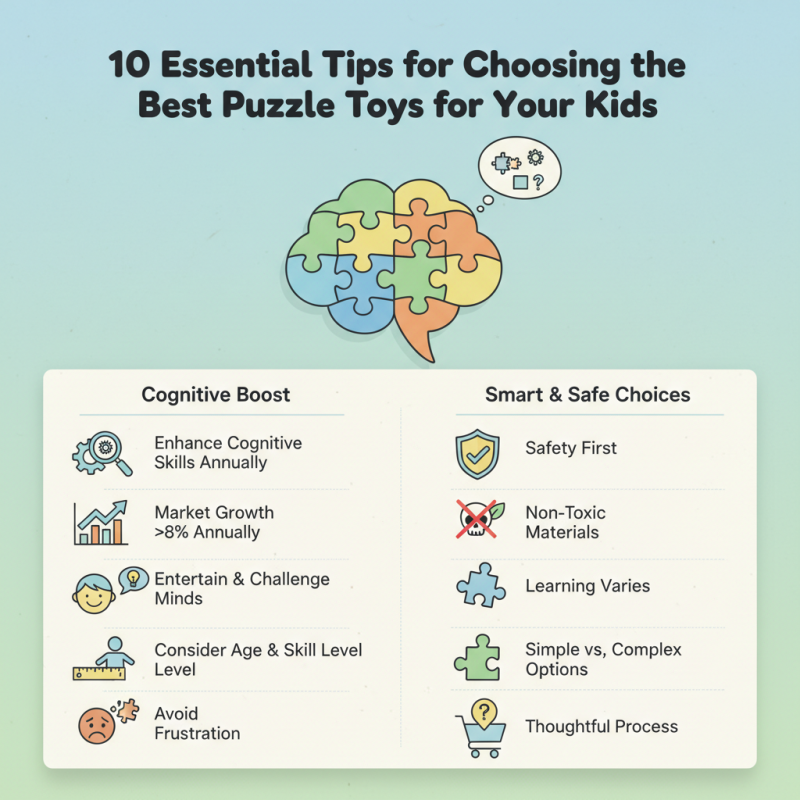
Choosing the right puzzle toys for kids involves considering their age. Age-appropriate toys can foster cognitive development and enhance problem-solving skills. Studies show that children engage better with toys designed for their specific developmental stages. For example, toddlers benefit from larger, simpler puzzles. This helps them grasp concepts like shapes and colors.
One tip is to check the recommended age on the packaging. Many toys include this information. It’s crucial to pick toys that match the child’s abilities. Puzzles that are too complex can lead to frustration. A balance between challenge and skill is key. Kids thrive when they can succeed with effort, not when they feel overwhelmed.
Also, look for puzzles that encourage creativity. Toys with multiple solutions can promote independent thinking. A recent report highlighted that children who play with versatile puzzle toys show 30% higher problem-solving skills. Parents should regularly reassess their child's interests and abilities. Kids grow and change quickly, and so should their toys. Remember, it’s okay to make mistakes in toy selection. Reflecting on what works best fosters continued learning for both kids and parents.
This chart illustrates the recommended types of puzzle toys for different age groups. As children grow, the complexity and variety of puzzle toys increase, highlighting the importance of selecting age-appropriate options to engage and challenge them.
Puzzle toys can greatly influence cognitive development during early childhood. These engaging toys require kids to think critically. They promote problem-solving skills and encourage logical reasoning. When children manipulate puzzle pieces, they enhance spatial awareness. Many kids enjoy the satisfaction of completing a puzzle. That sense of accomplishment is invaluable.
However, it's essential to choose the right puzzle toys. Not all puzzles are alike. Some may be too complex, causing frustration. Others might be too simple, leading to boredom. Parents should observe their children's interests and capabilities. This helps in selecting appropriately challenging puzzles. Every child is different, and what works for one may not work for another.
Interaction with puzzle toys can also boost memory skills. Kids learn to remember shapes, colors, and patterns. These toys can promote cooperative play, fostering social skills as they work with peers. Yet, there can be pitfalls. Kids may become overly reliant on these toys. Balance is crucial. Parents must encourage a variety of activities for a well-rounded development.
| Tip | Description | Cognitive Benefits | Recommended Age |
|---|---|---|---|
| 1. Choose Age Appropriateness | Select puzzles designed for the child's age group to ensure engagement. | Supports developmental milestones. | 2-5 years |
| 2. Material Quality | Look for durable, safe materials that can withstand rough play. | Enhances fine motor skills. | All ages |
| 3. Complexity Levels | Choose puzzles with varying difficulty to challenge growing skills. | Fosters problem-solving abilities. | 3-7 years |
| 4. Educational Themes | Select puzzles that teach numbers, letters, or shapes. | Enhances cognitive skills through educational content. | 2-6 years |
| 5. Engaging Colors and Designs | Opt for vibrant colors and imaginative designs to attract interest. | Stimulates visual and cognitive development. | 2-4 years |
| 6. Encourage Social Play | Select puzzles that can be played with others to boost social skills. | Promotes teamwork and communication. | 3-8 years |
| 7. Explore Different Formats | Consider 3D puzzles, floor puzzles, or traditional jigsaw puzzles. | Encourages spatial awareness and critical thinking. | 4-8 years |
| 8. Check for Safety Standards | Ensure the puzzles meet safety regulations and are non-toxic. | Provides a secure playing environment. | All ages |
| 9. Travel-Friendly Options | Look for compact puzzles that are easy to carry on trips. | Encourages learning on-the-go. | 3-7 years |
| 10. Parental Involvement | Play together to enhance the learning experience. | Strengthens parent-child bonding and encourages dialogue. | All ages |
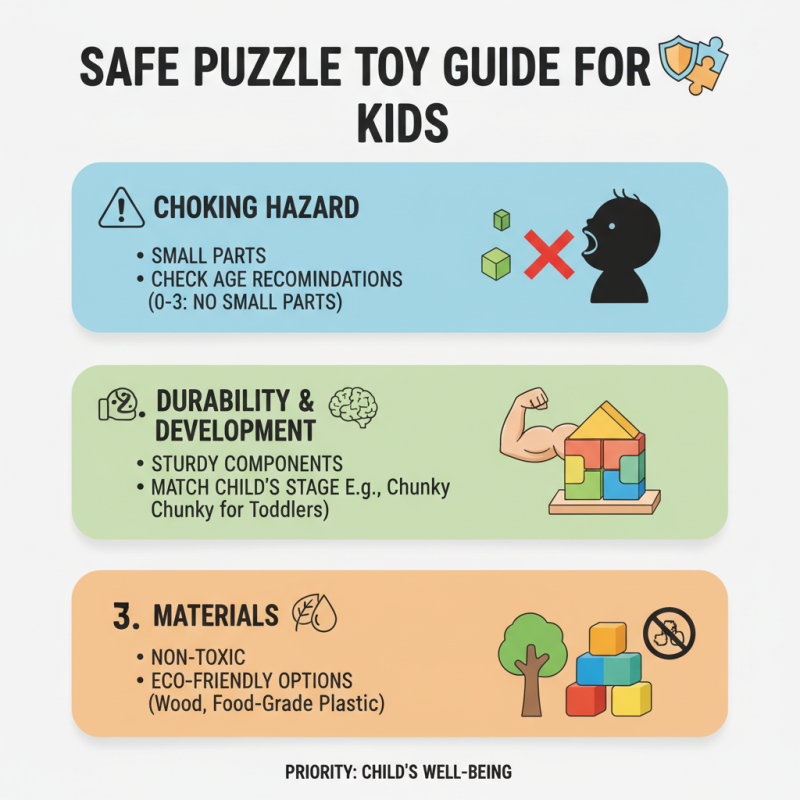
When selecting puzzle toys for kids, safety should be the top priority. Many toys contain small parts that can pose choking hazards. Check for the age recommendations and ensure that the toys fit your child's developmental stage. Components should be sturdy and designed to withstand rough handling. Look for toys made from non-toxic materials. Some plastics can release harmful chemicals, so choosing eco-friendly options can ease your mind.
Pay attention to the finish and edges of the toys. Sharp edges can cause cuts. Smooth surfaces help prevent injury. Consider any coatings on the toys. Paints must be lead-free and safe. It’s not always easy to find this information. Always read labels carefully. Sometimes, manufacturers don't provide enough details.
Furthermore, think about the toy’s longevity. Kids can be rough on their belongings. A product that breaks easily might create frustration. It is wise to invest in durable materials. Reflecting on your choices helps ensure a safe play experience. Consider the toy’s design. Will it grow with your child? Engaging and age-appropriate toys are essential for long-term enjoyment.
When selecting puzzle toys, understanding different types is crucial. Not all puzzles are created equal. According to a 2020 report from the American Educational Research Association, hands-on learning significantly enhances cognitive skills. For instance, jigsaw puzzles improve spatial awareness and problem-solving abilities. These skills are important for academic success.
There are various types of puzzles. Wooden puzzles often aid fine motor skills, while 3D puzzles enhance creativity. A study by the National Association for the Education of Young Children showed that children who engage with puzzles show advanced logical reasoning compared to peers. However, not all kids might find the same puzzles engaging. Some may struggle with complex designs and require patience and practice.
Consider your child's interests and developmental stage. It's vital to find the right balance between challenge and fun. Not every child will enjoy the same type of puzzle. This variability may lead to frustration and disengagement. Reflecting on your child's strengths can guide your choice. Use trial and error, and observe how each puzzle impacts your child's skill development over time.
When choosing puzzle toys for your child, consider their interests and developmental stage. Look for toys that encourage problem-solving skills. A well-designed puzzle can challenge your child without causing frustration. This balance is critical for maintaining their engagement.
Engagement is key to maximizing learning potential. Encourage your child to explore different ways to solve puzzles. Ask open-ended questions to spark discussion. For example, "What do you think comes next?" Breaking down tasks makes puzzles less intimidating. Celebrate their successes, no matter how small.
Observe your child’s reactions during playtime. If they seem disinterested or overwhelmed, it’s okay to modify the challenges. Try introducing simpler puzzles to build confidence first. Learning happens through trial and error. It’s important to allow your child to make mistakes. This can lead to deeper understanding and resilience. Creating a supportive environment is essential for their growth.