Leave Your Message

How to Choose Educational Toys for Your Business

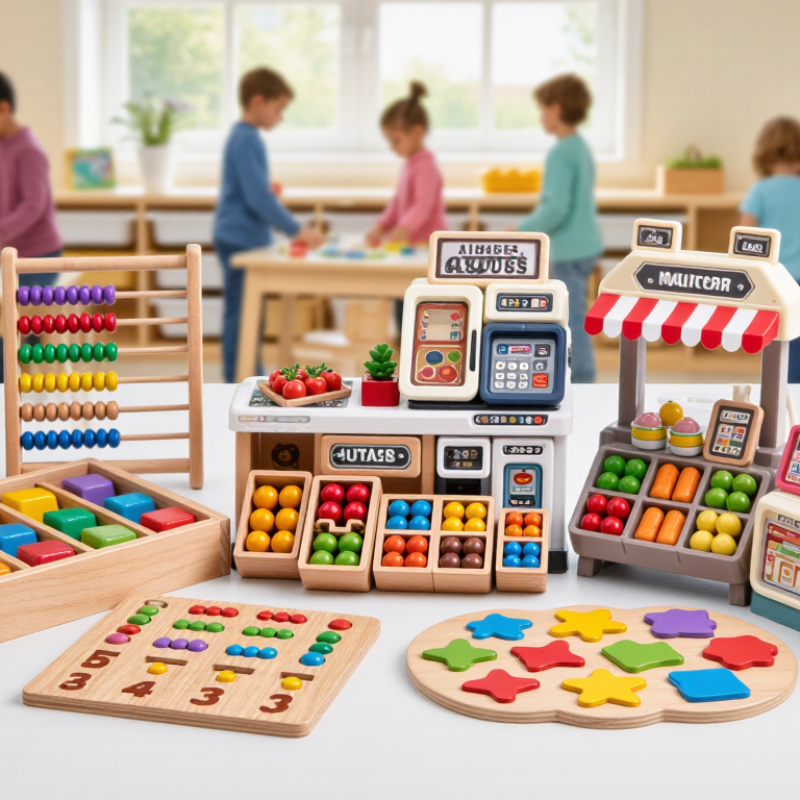
Choosing Educational Toys for your business means balancing learning value, child appeal, durability, and commercial practicality. A wooden counting set may look simple, yet its smooth edges, clear numerals, and sturdy storage tray matter during daily use. So does the play it invites. Dr. Stuart Brown, founder of the National Institute for Play, has said, “The opposite of play is not work—the opposite of play is depression.” His research highlights play’s importance, though it does not provide a product-selection formula. Buyers still need evidence about each toy’s intended age range, learning goals, and construction.

Start with the children and settings your customers serve. Compare how a puzzle supports problem-solving, or how a pretend shop encourages language and social play. Then inspect samples for loose parts, hard-to-clean surfaces, fading labels, and pieces that vanish easily. Ask suppliers for clear product information, care instructions, and replacement-part options. Check whether the toy holds attention after the first demonstration. A bright box is not proof of lasting value. Neither is an “educational” label.

For your business, weigh unit cost against expected lifespan, packaging, storage needs, and likely customer demand. A low price can become expensive if pieces break or instructions confuse caregivers. No checklist predicts every child’s curiosity. That uncertainty deserves a place in your planning. Careful selection can still help you build a useful range, earn buyer trust, and offer toys that invite meaningful play.
How to Choose Educational Toys for Your Business

Define Your Business Needs and Target Customers

Before choosing educational toys, define what your business needs to solve. A small shop may need compact, easy-to-restock items, while a school supplier may prioritize durable sets for group activities. Set a price range, decide how much shelf or storage space you can allocate, and identify the age groups you can serve well. Include clear learning goals, such as practicing counting, building fine-motor skills, or exploring simple science. Avoid treating “educational” as one customer need.

Then describe the buyer as well as the child. Parents may value easy cleanup and play at home; educators may need pieces that work for several children at once. The U.S. Census Bureau’s 2023 population estimates counted about 73.6 million children under 18, but that broad figure does not define your local customer. Check school enrollment, caregiver feedback, and sales inquiries in your area before ordering deeply. Start locally.

Use market data as a caution, not a shopping list. Circana reported that toy sales across 12 major global markets fell 7% in 2023. That suggests testing a small range before committing to large quantities. Track which ages, price points, and play formats customers actually request. One easy mistake is assuming a puzzle sells because it teaches a skill; parents may instead ask whether its pieces store neatly. Record those questions, then refine your assortment.
Match Toys to Children’s Ages and Learning Goals

Choosing educational toys starts with the child’s developmental stage, not a trend or bright package. Harvard University’s Center on the Developing Child reports that more than one million neural connections form every second during the first years of life. That pace makes hands-on exploration valuable, but age bands are only starting points. For toddlers, offer chunky stacking pieces, shape sorters, and toys that invite naming and simple cause-and-effect play. For preschoolers, try pretend-play sets, chunky puzzles, and counting objects. Older children may benefit from construction challenges, simple experiments, and games that encourage planning. Small steps matter.

Match each product to a clear learning goal. A sorting tray can support categorization; picture cards can prompt storytelling and vocabulary; blocks can invite early measurement and spatial reasoning. UNICEF’s 2018 Learning through Play report describes play as a way children build skills across developmental areas, supporting a balanced assortment rather than a shelf focused on one subject. When selecting stock, check whether instructions leave room for different solutions and whether pieces suit the intended age group.

Watch how children actually use samples. Do they return to the activity, explain their choices, or invent new rules? Those observations can reveal more than a skill label on a box. One limitation: a toy cannot guarantee a learning outcome, and the same activity may challenge one child while boring another. Ask caregivers and educators what children need, then adjust your age and goal mix as you learn.

Check Safety Standards, Materials, and Labeling

When choosing educational toys for your business, check the safety requirements that apply in each sales market. Standards can differ by country and product type, so request current test reports from suppliers rather than relying on a general safety claim. Confirm that reports match the exact toy, including its age range, components, and finish. A wooden shape sorter and a battery-powered learning toy may require different checks.

Materials deserve close attention. Ask what plastics, coatings, fabrics, and fillings are used, and whether small parts could detach during ordinary play. Inspect samples for sharp edges, loose seams, strong odors, and paint that chips when rubbed. These checks cannot replace laboratory testing, but they can reveal questions worth raising. I have learned that a polished sample does not always reflect every production batch.

Tips: Keep copies of test reports and supplier declarations. Check age warnings, choking hazards, care instructions, and required safety marks on the toy and packaging. Labels should be readable, durable, and consistent with the product’s tested age range. Small details matter. If wording or symbols seem unclear, ask a qualified compliance specialist before placing a large order.

Compare Quality, Pricing, and Supplier Reliability

Choosing educational toys for your business means checking quality beyond attractive packaging. Inspect seams, edges, moving parts, and small components on a physical sample. Ask suppliers for material details and relevant safety test documentation. Check that instructions are clear and suited to the intended age group. A sample can look excellent, yet differ from the production batch. No checklist catches everything.

Compare prices using the full landed cost, not just the unit quote. Include packaging, freight, minimum order quantities, and likely replacement costs. Then compare products with similar materials and features; a cheaper toy may need more frequent replacement. Ask suppliers for written specifications, realistic lead times, and clear procedures for handling defects. Their response to a specific question can reveal more than a polished sales sheet. Still, one delayed reply may reflect a busy week, not a weak supplier.

Tips: Order samples from shortlisted suppliers and record what you inspect. Request a small trial order before committing to larger quantities. Keep notes on defects, delivery dates, and packaging condition. Revisit your scoring criteria after real customer feedback; your first assumptions may need adjustment.

How to Choose Educational Toys for Your Business - Compare Quality, Pricing, and Supplier Reliability
Toy Category Quality Checks Pricing Profile Supplier Reliability Signals Business Fit and Key Risks
Wooden puzzles and shape sorters Check for smooth edges, secure components, durable finishes, and age-appropriate piece sizes. Request documentation for applicable toy-safety requirements in the sales market. Often a moderate unit cost; price is affected by wood type, piece count, finish, and packaging. Compare landed cost, including freight and duties. Look for consistent sample quality, documented inspection procedures, clear production lead times, and advance notice of material or design changes. Suitable for early-learning and gift assortments. Risks include splintering, loose parts, and damage from moisture or poor packaging.
Building blocks and construction sets Assess fit between pieces, strength under repeated use, color consistency, and whether small parts are appropriate for the intended age group. Ranges from low to high depending on material, set size, precision, and included storage. Larger assortments may increase freight and inventory costs. Verify that repeat orders match approved samples and that the supplier can manage component counts, packaging, and replenishment consistently. Supports open-ended play and repeat purchases. Risks include missing pieces, inconsistent tolerances, and small-part hazards for younger children.
Science and experiment kits Review the clarity of instructions, completeness of components, age guidance, and safe handling information. Check any chemical or electrical components against local rules. Usually moderate to high because of multiple components, printed materials, and compliance-related packaging. Refill availability can affect long-term value. Prefer suppliers that provide a complete bill of materials, change-control notices, accurate packing checks, and current product documentation. Good for school, hobby, and STEM-focused channels. Risks include missing items, unclear instructions, and requirements that vary by destination market.
Art and craft sets Check that tools are fit for the stated age, containers close securely, and materials have suitable safety labeling and instructions. Often low to moderate per set, but assortment complexity and packaging can raise costs. Calculate the cost per usable activity, not just per box. Assess the supplier’s ability to keep colors, quantities, and included materials consistent across batches; request samples from production runs when possible. Works well for classrooms and seasonal ranges. Risks include dried-out materials, leakage, and frequent changes to component availability.
Board games and matching games Inspect print legibility, card and board durability, piece counts, and the accuracy of rules and age recommendations. Typically moderate; printing volume, number of components, and box size influence unit and shipping costs. Larger print runs may reduce unit cost but increase stock commitment. Check proofing and artwork approval steps, packing accuracy controls, production capacity, and the supplier’s process for correcting defects. Suitable for family, classroom, and travel categories. Risks include printing errors, missing pieces, and bulky packaging relative to product value.
Supplier evaluation before ordering Request representative samples and relevant test reports or compliance documents for the intended market. Confirm that documents match the exact product and materials. Compare like-for-like quotations that state order quantity, customization, packaging, payment terms, freight basis, and any tooling or setup charges. Check references where available, written lead-time commitments, response quality, defect-resolution terms, and a clear process for order tracking. Use a small trial order before scaling. A low quoted price alone does not establish product quality, regulatory suitability, or dependable delivery.
Comparison note: Pricing profiles are relative rather than quoted market prices. Actual costs depend on order volume, specifications, destination, shipping, duties, and applicable compliance requirements. Confirm current requirements and landed costs before purchasing.

Build and Review a Balanced Product Assortment

A balanced educational assortment should serve different ages, abilities, budgets, and play styles. Stock hands-on puzzles, building sets, pretend-play materials, early literacy tools, and simple science activities. Keep the range varied. A shelf of colorful counting toys may look educational, but it leaves little room for storytelling or open-ended play. Check age guidance, piece size, clear instructions, and whether children can use each item without constant adult help.

Market data can guide decisions, but it cannot replace observation. Circana’s U.S. toy-market tracking recorded $29.2 billion in sales in 2022, followed by an 8% decline to $28.3 billion in 2023. That shift supports careful testing rather than deep orders across every trend. Start with a few price points and track sell-through, returns, and customer questions by age group. Watch which products invite repeat play, not just quick interest. A toy that looks clever in a catalogue may frustrate a child after ten minutes. I would review the mix monthly, though that may be too frequent for a small shop; seasonal patterns can distort the picture. Keep notes on what staff observe, then adjust quantities before expanding a category.