10 Best Magnetic Toys for Kids to Buy in Bulk
Magnetic Toys can turn a table into a tiny engineering studio: children connect colorful tiles, test shapes, and rebuild when a tower leans. For schools, play centers, and families buying in bulk, the right choice is not simply the largest set. Durability, age suitability, clear instructions, and easy-to-count pieces matter.
The market is growing. Grand View Research estimated the global toys market at USD 108.7 billion in 2024 and projected continued growth through 2030. That figure covers toys broadly, not magnetic products alone, so it should not be mistaken for a magnetic-toy sales estimate. Still, it helps explain why buyers face so many options. More choice is useful. It can also make comparisons harder.
Safety deserves equal attention. The U.S. Consumer Product Safety Commission has warned about serious injuries from swallowed high-powered magnets. Pediatric injury researcher Dr. Gary Smith has cautioned about those loose magnets: “These are not toys.” His warning concerns dangerous high-powered magnets, not every properly designed magnetic building set. Buyers should check age guidance, product details, and whether magnets remain securely enclosed. For bulk orders, inspect a sample before purchasing dozens. Count the pieces. Check the connectors. Look closely at the smallest parts.
This guide compares ten Magnetic Toys with group use in mind, from classroom construction sets to compact travel-friendly kits. It considers play value, storage, and practical purchasing details—not just bright packaging. No shortlist is flawless. A set that delights one group may frustrate another, especially when pieces disappear under chairs.
What Magnetic Toys Are and How They Support Children's Development
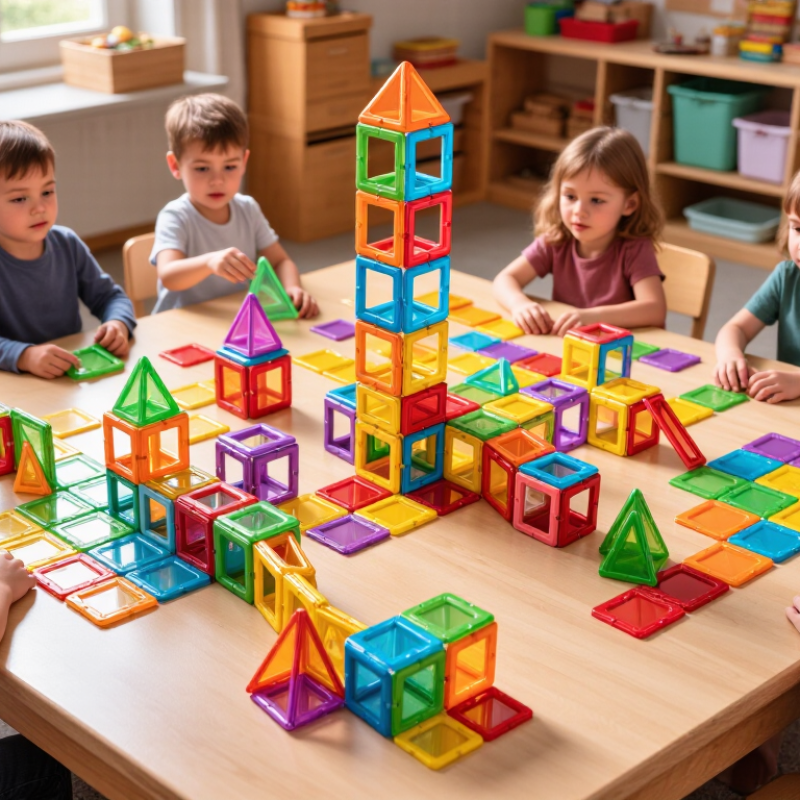
Magnetic toys use enclosed magnets to connect tiles, rods, or shapes into structures. A child might join three pieces, watch a tower lean, then rebuild its base. That small trial-and-error loop exercises spatial reasoning, planning, and fine-motor control. It also invites conversation: “Why did this side fall?” A caregiver’s question can turn simple building into practice with describing, predicting, and revising ideas.
The American Academy of Pediatrics’ 2018 clinical report, “The Power of Play,” links play with language, self-regulation, and executive-function development. It reviews research on play broadly, not trials proving magnetic toys are better than other materials. That distinction matters. Magnetic sets can encourage shared building and turn-taking, but they do not guarantee learning on their own. For bulk purchases, choose age-appropriate sets with clearly stated piece counts and inspect pieces regularly for damage. Supervise younger children, since small components can pose choking risks. Keep it hands-on. Some children may prefer blocks or drawing, and that is useful to notice. Offer open-ended prompts, then leave room for children to solve problems their own way.
Magnetic Toy Play: Example Learning Opportunities
The bars count example play activities in each developmental area—not measured child outcomes.
- Spatial reasoning (4): plan a stable structure, rotate pieces to fit, build a symmetric shape, compare shapes.
- Fine motor skills (3): align pieces, connect and separate pieces, steady a construction.
- Creativity (3): invent a design, make a pattern, use a construction in pretend play.
- Early math and science (2): sort shapes, test which designs stay standing.
Magnetic construction play can offer opportunities to practice these skills; the chart is an illustrative activity count, not a developmental assessment. Follow the toy’s age guidance and supervise play, especially around small or loose magnets.
Safety and Quality Criteria for Choosing Magnetic Toys
When buying magnetic toys in bulk, start with the age range and construction, not the color.
Magnets should be fully enclosed in sturdy pieces, with seams that stay closed after repeated drops and twisting. Check samples for cracks, loose panels, sharp edges, and parts that can detach. Small details matter. A child may mouth a piece, so clear age guidance and supervision still matter, even when pieces look large. If a magnet comes loose, stop using that set.
For bulk orders, sample several units from each batch and request material and safety test records. Look for consistent magnet strength, smooth finishes, readable instructions, and packaging that keeps pieces together. A quick shake and careful seam check can reveal defects, but they cannot replace formal testing. No shortcut works. If pieces differ in fit or finish, pause the order and ask how defects are tracked and handled. I would not treat a polished sample as proof that every carton is equally safe. Tempting, but risky.
Ten Magnetic Toys to Consider Buying in Bulk
Buying magnetic toys in bulk can give classrooms and playrooms more ways to explore matching, building, and problem-solving. Consider magnetic tiles, chunky magnetic blocks, and large-ended connector rods for open-ended construction. A magnetic drawing board invites quick sketches without loose pieces. Enclosed-bead maze boards offer hands-on practice with tracking and patience. Keep it simple.
For quieter play, try magnetic fishing games with oversized pieces, dress-up figures with securely attached clothing, and pattern puzzles with large shapes. Gear-building sets can show how parts move together. Letter and number boards support early sorting and spelling. That makes ten options, though the best mix depends on children’s ages, storage space, and how often toys need cleaning.
Bulk purchases deserve a closer safety check. Look for age guidance, sturdy construction, and magnets that remain fully enclosed during ordinary play. Avoid sets with small, loose magnetic pieces for young children; a detached magnet can be dangerous if swallowed. Inspect toys regularly, especially after busy group sessions. I’d also order a small sample first when possible: product photos rarely show whether pieces feel awkwardly slippery or are hard to put away.
How to Match Magnetic Toys to Children's Ages and Interests
Matching magnetic toys to children’s ages and interests makes bulk buying more useful than choosing one large set for everyone. For preschoolers, look for chunky, easy-to-grip pieces and follow the age label closely. Avoid sets with small parts for children under three. Loose magnets can be dangerous if swallowed, so check that pieces stay securely enclosed and inspect them for cracks. Keep pieces visible. That matters.
Older children may enjoy geometric tiles for building towers, bridges, and pretend houses. Kids drawn to puzzles might prefer magnetic tangrams or pattern cards, while budding storytellers can use magnetic figures to invent scenes. In a classroom or playroom, a mix of shapes and challenge levels gives children room to explore together without requiring identical skills. Still, more pieces do not always mean better play. A huge set can overwhelm younger children or leave key shapes missing after a busy afternoon.
Before ordering in bulk, try a sample set with the intended age group. Notice which pieces children reach for, whether they can connect them easily, and how cleanup goes. It is easy to overvalue colorful packaging and overlook storage. Choose sturdy containers, count the pieces, and set aside damaged items; even a thoughtful purchase may need adjustments once real play begins.
Bulk Purchasing Tips for Schools, Families, and Play Centers
Buying magnetic toys in bulk works best when the order matches how children actually play. A classroom may need several small sets for rotating stations; a play center may need larger, clearly separated kits. Ask suppliers for age guidance, piece counts, and documentation showing applicable toy-safety testing, including ASTM F963 where relevant. Avoid choosing by lowest unit price alone. Missing pieces are costly.
Before ordering, check the smallest components and how magnets are enclosed. Set up a simple intake routine: count each set, inspect housings, and label bins by age range and piece type. The U.S. Consumer Product Safety Commission estimated 231,700 toy-related emergency-room-treated injuries in 2023. That figure covers toys broadly, not magnetic toys specifically, but it is a useful reminder to review safety and supervision plans. For shared spaces, keep damaged pieces out of circulation and store sets where staff can control access. Count again after play. Small habit, real payoff.
Bulk orders can also create storage problems. Measure shelves and choose containers that keep pieces visible, dry, and separate; one deep mixed bin can frustrate both children and staff. Families buying together might split sealed sets only after checking that every group receives the correct instructions and age information. It is tempting to assume larger quantities always mean better value. Sometimes they just mean more pieces to track. Start with a modest order, observe which shapes children use, then adjust the next purchase.