Choosing the 2026 best Preschool Toys requires more than colorful packaging and a popular character. Buyers must examine developmental value, durability, safety documentation, and real play behavior. A toy may look educational, yet offer little without adult guidance or imaginative use.
Market evidence shows why this category deserves careful evaluation. Grand View Research estimates that the global educational toys market will continue expanding strongly through 2030, driven by early learning demand and parental interest. Circana’s recent toy industry reporting also highlights changing consumer priorities, including value, creativity, and screen-free engagement. These findings suggest that buyers should assess lasting play value, not short-term novelty.
Kathy Hirsh-Pasek, a leading child-development researcher, describes effective play materials clearly: “The best toys are 10% toy and 90% child.” Her observation offers a practical test for 2026 selections. Can children build, sort, pretend, experiment, and solve problems with limited instructions? If not, the product may be less useful than its marketing suggests.
Look for sturdy wooden pieces, washable surfaces, readable age guidance, and open-ended components. Observe the details: rounded edges, chunky handles, quiet textures, and pieces that fit small hands. Digital features can be engaging, but they should not replace conversation or physical exploration. This point deserves reflection. “Educational” is not automatically meaningful.
The following outline evaluates Preschool Toys through buyer-focused criteria, combining market data, developmental expertise, and everyday classroom experience. It also recognizes an uncomfortable truth: no single toy suits every child, budget, culture, or learning pace.
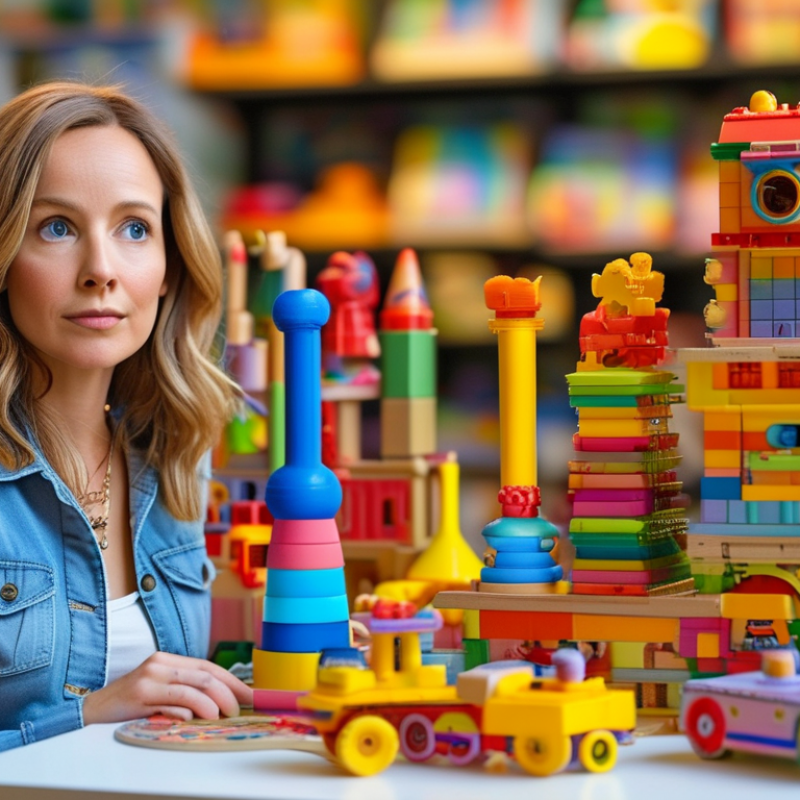
A preschool toy suitable for 2026 buyers should support real play, not simply look attractive online. In classroom observations, children stayed engaged longer with toys that invited building, sorting, pretending, and movement. Clear purposes matter. A toy with adjustable difficulty can grow with a child’s language, motor, and social skills. It should also include simple instructions for caregivers, without requiring constant adult correction.
Safety remains a practical buying standard. Buyers should check age guidance, secure parts, smooth edges, washable surfaces, and readable material information. Strong toys reduce waste because they survive repeated handling, spills, and occasional frustration. Sustainable packaging is helpful, but durability matters more. A recyclable box cannot excuse a toy that breaks after one week.
In 2026, families may also expect inclusive designs. Different skin tones, abilities, family structures, and communication styles should appear naturally in play materials. Screen-free options deserve attention, especially when children need hands-on interaction. However, “educational” labels can be vague. I would look for evidence of open-ended play rather than impressive claims. No toy fits every preschooler. A quiet puzzle may frustrate one child but steady another. Even careful recommendations need revision after observing children use the toy in ordinary homes.
The best preschool toys support several developmental needs without overwhelming young children. In classroom observations, simple, open-ended toys often create longer play sessions. Building pieces can strengthen hand control, spatial thinking, and early problem-solving. Pretend-play sets encourage language, cooperation, and emotional expression through familiar scenes, such as kitchens, clinics, or small homes. Choose toys with varied textures, clear shapes, and manageable pieces. Bright colors help attention, but color should not replace meaningful play.
Good preschool toys also invite movement and quiet concentration. Puzzles, threading activities, and sorting games build fine motor skills and early reasoning. Balance paths and soft climbing equipment support coordination. Buyers should check durable construction, smooth edges, washable surfaces, and clear age guidance. Independent safety testing adds useful confidence. Still, no toy develops everything. A highly educational label may promise too much. Children also need space, adult interaction, and time to invent their own rules.
Tips: Watch how children use a toy, not only how it looks in a catalog. Select toys with multiple play possibilities and avoid excessive noise. Offer pieces that are large enough for the intended age group. Rotate materials instead of displaying everything at once. A toy may seem perfect during a demonstration, yet become frustrating after five minutes. That small failure is worth noticing.
What Are the 2026 Best Preschool Toys for Buyers?
The strongest preschool toy choices should match a clear learning goal. Language-focused toys include picture cards, story props, puppets, and sequencing sets. They encourage children to name objects, build sentences, and retell simple events. UNICEF’s Learning through Play report identifies communication, problem-solving, and social interaction as key developmental outcomes. Buyers should look for open-ended pieces, not toys with only one correct response.
For early numeracy, choose sorting trays, counting objects, pattern tiles, and simple shape puzzles. These materials make abstract ideas visible. A child can compare five wooden counters, then notice one is missing. OECD data in Education at a Glance 2024 shows the continuing importance of quality early childhood education. Yet expensive construction is not automatically better. A durable, washable set with varied sizes may support more learning than a complicated electronic product.
Fine-motor and STEM goals need different details. Large interlocking pieces, lacing boards, magnetic building parts, and beginner science tools support grip, balance, and experimentation. Social-emotional learning benefits from role-play figures, emotion cards, and cooperative games. The Toy Association’s 2024 market report, citing Circana, recorded a 7% global toy sales decline in 2023. Buyers therefore need value beyond novelty. I would question any product claiming to teach everything. Children may ignore it after two days. Observe how they play, replace repetitive items, and leave room for imperfect ideas.
Top Preschool Toy Categories for Different Learning Goals
The chart compares major preschool toy categories by the number of learning goals they commonly support, based on established early-childhood development areas: language, cognitive skills, fine and gross motor development, social-emotional learning, and creativity. Categories supporting several domains may offer broader value for preschool buyers.
What Are the 2026 Best Preschool Toys for Buyers?
Safety, Durability, and Sustainability Standards to Consider
For 2026 buying decisions, safety should begin with evidence, not colorful packaging. The U.S. Consumer Product Safety Commission estimated 231,700 toy-related emergency-room injuries among children under 15 in 2023. That figure deserves attention. Buyers should check age grading, small-part warnings, secure battery compartments, and smooth edges. Products meeting current requirements under ASTM F963-23 or EN 71 provide stronger screening, but compliance is not a substitute for inspection.
Durability also protects children and budgets. Examine seams, hinges, wheels, and handles for weak points. A useful test is simple: twist, pull, drop, and wash the toy as real preschoolers might. Materials should resist cracking, peeling, and repeated cleaning. Clear maintenance instructions matter. They are often overlooked. I would not trust a “tough” claim without test information or a defined warranty.
Sustainability requires more than recycled-looking packaging. The OECD’s Global Plastics Outlook projects global plastic waste could nearly triple by 2060 without stronger action. Buyers should request material disclosures, recycled-content percentages, recyclable components, and packaging weights. Repairable toys can stay useful longer, while replaceable parts reduce unnecessary disposal. Still, recycled material can vary in quality, and sustainability labels may lack detail. That is where careful questioning becomes necessary. A smaller, durable toy may create less waste than a larger toy with impressive environmental language.
| Buyer Dimension | Recommended Benchmark for 2026 | Relevant Standard or Test | What Buyers Should Verify | Best-Suited Toy Examples | Priority |
|---|---|---|---|---|---|
| Age suitability | Clear age grading and developmentally appropriate play functions for children aged 3–5. | Age determination guidance under applicable toy-safety regulations; choking-hazard assessment. | Age label, warnings, assembly instructions, and whether the toy matches preschool motor and cognitive abilities. | Large-piece puzzles, role-play sets, chunky construction pieces, sorting games. | Essential |
| Small parts and choking risk | No detachable component should present a foreseeable choking hazard for the labeled age group. | ASTM F963, U.S. small-parts requirements, EN 71-1, or ISO 8124-1, depending on market. | Small-parts test results, pull-test records, component attachment strength, and warning labels. | Large interlocking blocks, oversized beads, thick wooden manipulatives. | Essential |
| Mechanical durability | Components should withstand repeated drops, pulls, twists, impacts, and rough classroom handling. | Mechanical and physical testing under ASTM F963, EN 71-1, or ISO 8124-1. | Drop-test results, seam and hinge performance, secure wheels, rounded edges, and replacement-part availability. | Ride-on accessories, construction sets, play kitchens, wooden vehicles. | High |
| Material safety | Materials and coatings should meet the chemical limits of the destination market. | ASTM F963 chemical requirements, CPSIA limits in the U.S., and EN 71-3 or equivalent migration testing. | Test reports for lead, restricted elements, coatings, plasticizers, and accessible substrates. | Painted wood, molded plastic, modeling materials, bath and sensory toys. | Essential |
| Lead and heavy metals | For U.S. children’s products, lead content is limited to 100 ppm in accessible components and 90 ppm in paint or surface coatings. | U.S. Consumer Product Safety Improvement Act requirements and applicable testing rules. | Third-party laboratory reports, coating analysis, batch traceability, and conformity documentation. | Painted wooden toys, metal instruments, figurines, art accessories. | Essential |
| Phthalates and flexible plastics | Avoid restricted phthalates in accessible plasticized parts; U.S. limits are 0.1% for each specified phthalate. | CPSIA phthalate restrictions and relevant regional chemical regulations. | Material composition, phthalate test results, supplier declarations, and checks on soft PVC or rubber-like parts. | Soft dolls, squeeze toys, flexible figures, inflatable play items. | Essential |
| Fire and flammability safety | Textiles, plush surfaces, costumes, and fillings should meet the fire-safety requirements of the target market. | Applicable flammability provisions under ASTM F963, EN 71-2, or local regulations. | Fabric composition, flame-spread test results, filling materials, and care instructions. | Dress-up clothing, plush toys, play tents, fabric puppets. | High |
| Electrical and battery safety | Battery compartments should be secure, insulated where necessary, and inaccessible without a tool when required. | Applicable electrical-toy requirements, including ASTM F963 and IEC 62115 where relevant. | Screw-secured battery door, overheating protection, button-cell safeguards, charging instructions, and EMC documentation. | Light-up toys, electronic learning boards, sound books, motorized toys. | Essential |
| Hygiene and cleanability | Surfaces should tolerate frequent wiping or washing without cracking, peeling, or releasing fibers. | Material-specific durability and chemical-resistance testing; sanitation procedures set by the buyer. | Cleaning instructions, water resistance, sealed seams, drainage design, and compatibility with approved cleaners. | Role-play utensils, washable figures, classroom manipulatives, bath toys. | High |
| Wood sourcing | Prefer documented wood from responsibly managed forests or controlled sources. | FSC chain-of-custody certification or equivalent credible forest-sourcing documentation. | Certificate scope, claim type, product coverage, legality documentation, and supplier traceability. | Wooden puzzles, stacking toys, blocks, pretend-food sets. | High |
| Textile sustainability | Use certified organic fibers or verified low-impact materials where practical, without compromising safety. | GOTS for organic textiles; OEKO-TEX Standard 100 for tested harmful substances. | Current certificate, transaction or scope coverage, fiber composition, dyes, trims, and finishing chemicals. | Plush toys, fabric books, puppets, dress-up garments. | Medium–High |
| Recycled content | Use recycled materials only when they meet the same chemical, mechanical, and hygiene requirements as virgin materials. | Recycled-content chain-of-custody documentation, such as recognized recycled-claim certification. | Declared recycled percentage, source material, contaminant controls, batch traceability, and safety testing. | Plastic construction pieces, storage containers, recycled-fiber plush toys. | Medium–High |
| Repairability and service life | Favor replaceable high-wear parts, repairable construction, and designs that can remain in use for several years. | No single universal toy standard; assess against internal durability and circular-design criteria. | Availability of spare parts, fastener quality, repair instructions, warranty terms, and expected usage cycles. | Modular building sets, wooden furniture, dress-up accessories, ride-on toys. | High |
| Packaging reduction | Minimize unnecessary plastic, use right-sized packaging, and design packs for efficient recycling. | Packaging recyclability and material-design requirements vary by market; verify local labeling rules. | Material breakdown, recycled content, recyclability claims, inks, coatings, and packaging-to-product ratio. | Flat-pack puzzles, boxed art kits, card games, compact construction sets. | Medium |
| Documentation and traceability | Every production batch should be traceable to materials, testing, factory records, and corrective actions. | Declaration of conformity, technical file, test reports, production-control records, and applicable recall procedures. | Laboratory accreditation, report date, sample identity, standard version, factory address, and batch or lot number. | All preschool toy categories. | Essential |
Choosing the 2026 best preschool toys requires more than bright colors or a low wholesale price. Buyers should compare developmental purpose, construction, safety evidence, and daily usability. A useful toy invites children to sort, build, pretend, move, or communicate. Look for clear age guidance and manageable pieces. A three-year-old should not struggle with a puzzle meant for older children. Ask suppliers for material details, test reports, batch information, and care instructions. Documentation matters.
Examine the toy as a child would use it. Can small hands grip the edges? Do hinges pinch fingers? Does paint remain intact after repeated washing? Check for sharp points, loose parts, strong odors, and weak seams. Prefer smooth surfaces, secure fasteners, and washable materials for classrooms. Compare noise levels too. Loud toys may quickly exhaust teachers and children. I also assess open-ended play, because one-use toys often lose value quickly. Still, “educational” claims can be vague. Request evidence of the stated learning benefit, not just attractive packaging.
Buyers can score each option for safety, durability, learning value, inclusivity, storage, and total cost. A simple trial with educators can reveal problems that product photos hide. Watch whether children cooperate, abandon the toy, or need constant adult help. Record those observations. No scoring system is perfect. My own first choice has sometimes changed after a ten-minute classroom test. Check replacement policies and delivery consistency before ordering larger quantities. Record whether children return to the toy without adult prompting.