Leave Your Message

How to Choose the Best Gift Toys in 2026?

Choosing the best Gift Toys in 2026 means matching a child’s interests, age, and everyday play habits—not chasing the loudest packaging. Circana’s 2023 Global Toy Industry Performance report recorded worldwide toy sales of $108.7 billion, down 7% from 2022. That shift makes thoughtful choices more useful than impulse buying. A toy that gets played with repeatedly may offer more value than one that looks impressive for a day.

Industry trends can help, but they are only a starting point. The Toy Association’s 2024 Toy Trends report discusses themes including imaginative play, collectibles, and toys inspired by popular entertainment. These trends suggest what may catch a child’s eye; they cannot tell you whether a specific toy suits that child. Notice the details: a five-year-old who builds for an hour may enjoy a sturdy construction set, while a child who loves role-play might prefer a small pretend-play kit. Ask caregivers about existing interests and toys before choosing.

Fit matters. So does durability. Check the maker’s recommended age, materials, cleaning instructions, and whether small pieces could be unsuitable for younger children in the household. Read product descriptions carefully, and compare them with independent reviews rather than relying on promotional claims alone. Still, no checklist predicts delight perfectly. Children change their minds. This guide explores practical ways to weigh play value, quality, safety information, and budget when choosing Gift Toys in 2026—while leaving room for a little surprise.
How to Choose the Best Gift Toys in 2026?

Identify the Recipient’s Age, Interests, and Needs

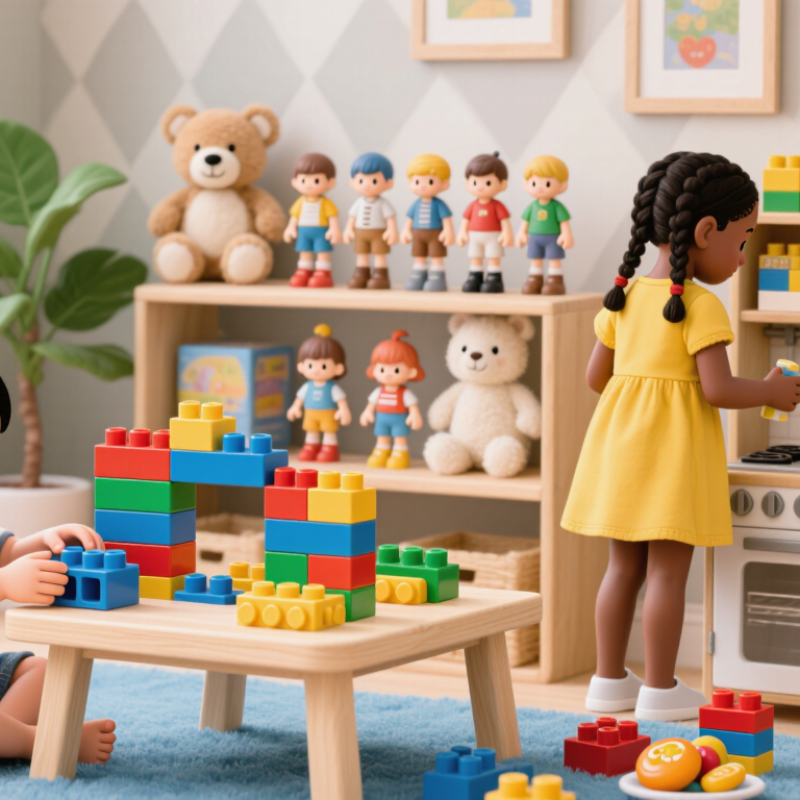
A toy feels thoughtful when it fits the child, not just the occasion. Check the age guidance, then consider how the child actually plays. A preschooler who enjoys stacking may prefer chunky blocks over a complicated craft kit. A quiet child might like a simple puppet or soft sensory toy. Small details matter. Look for clear instructions, sturdy parts, and materials that suit the child’s age and abilities. If a toy includes small pieces, check whether the recipient is old enough to use them safely. The packaging can help, but it cannot tell you everything about a child’s coordination or comfort.

Interests are useful clues, though they can change quickly. Ask a caregiver what the child returns to: pretend cooking, drawing, animals, building, or outdoor play. A toy connected to a real interest is more likely to be used than one chosen only for its bright colors. Needs matter too. A child who shares a small room may appreciate a compact toy, while a child who gets frustrated easily may do better with open-ended play and no strict rules. I have sometimes mistaken a popular toy for a personal one. That can happen. A quick conversation with the caregiver can reveal preferences, sensitivities, or practical limits you might otherwise miss.

Check Toy Safety Standards and Age Recommendations

When choosing a gift toy, check its age label and safety information before judging how fun it looks. Age guidance often reflects risks such as choking hazards, sharp edges, or parts that can detach. Small parts matter. For young children, inspect seams, wheels, buttons, and battery compartments; avoid toys with pieces that could fit entirely in a child’s mouth. A label is a starting point, not a guarantee, so consider the child’s habits and abilities too.

In the United States, ASTM F963 requirements are incorporated into mandatory toy rules overseen by the Consumer Product Safety Commission (CPSC). The CPSC’s 2023 Toy-Related Deaths and Injuries report estimated 231,700 toy-related injuries treated in hospital emergency departments that year. That figure makes careful checking worthwhile, even for ordinary gifts. Look for clear age recommendations, required warnings, and sturdy construction. Pull gently at attached parts, check for loose stitching, and make sure battery covers need a tool to open when appropriate. Labels are clues. I would still recheck a toy after unwrapping it, because packaging can hide a loose piece or a rough edge.

Compare Educational, Creative, and Play Value

A strong gift toy can teach, invite creativity, and stay enjoyable after the first afternoon. Compare these qualities rather than judging a toy by its feature list. Educational value works best when children can discover ideas through action. A counting game, for example, might use wooden pieces that children sort, group, and rearrange. Check whether the challenge suits the child’s age and attention span. If an adult must explain every step, independent play may be limited. That matters.

Creative toys leave room for personal choices. Blocks can become a bridge one day and a small animal shelter the next. Materials such as washable markers, sturdy paper, or simple building parts encourage experimentation without prescribing one result. Play value is different: it asks whether a child will return to the toy and find new ways to use it. I sometimes overrate toys that look clever on the shelf; children may prefer a plain object they can control. Consider storage, durability, and whether the toy works alone or with others. A little mess is normal. It is also worth noticing whether the child enjoys making, pretending, solving, or simply repeating an action.

How to Choose the Best Gift Toys in 2026? - Compare Educational, Creative, and Play Value

Toy Type Typical Age Range* Educational Value Creative Value Play Value Best For What to Check Before Buying
Building and construction toys Varies by piece size and set; choose according to the package age guidance. Supports spatial reasoning, planning, and problem-solving. High: children can design and rebuild their own creations. High: open-ended designs can be revisited in many ways. Children who enjoy making, experimenting, and solving challenges. Check for small parts, age suitability, durability, and whether the set allows open-ended building.
Puzzles Choose the number and size of pieces to match the child’s age and experience. Encourages visual matching, concentration, and spatial reasoning. Moderate: variety comes mainly from image, format, and challenge level. Moderate: replay is possible, though the activity often has a clear endpoint. Quiet play, family activities, and children who like focused challenges. Consider piece size, puzzle difficulty, image interest, and storage needs.
Art and craft materials Depends on the materials; follow age labels and supervision guidance. Can support fine-motor practice, color exploration, and following steps. High: children can make original pictures, models, or projects. High when materials can be used for multiple projects. Children who enjoy drawing, making, decorating, or hands-on projects. Check material safety information, washable options, small components, and whether adult help is needed.
Pretend-play sets Varies by theme, accessories, and the child’s developmental stage. Can encourage language, storytelling, and social interaction. High: children invent roles, scenes, and stories. High: play can change with the child’s ideas and playmates. Children who enjoy role-play, storytelling, or playing together. Look for sturdy pieces, manageable accessories, and age-appropriate parts.
Board and card games Use the game’s recommended age and player count as a guide. May practice turn-taking, memory, counting, strategy, or communication, depending on the game. Moderate: creativity depends on the rules and game format. High for games that suit the players and can be played repeatedly. Family play, shared activities, and children who enjoy clear rules or friendly challenges. Check reading or counting requirements, play time, number of players, and whether an adult may need to explain the rules.
Beginner science and discovery kits Follow the kit’s stated age range and adult-supervision instructions. Can introduce observation, simple experiments, and cause-and-effect thinking. Moderate to high: children can explore questions within the kit’s activities. Moderate: repeat play depends on whether materials and activities are reusable. Curious children who like hands-on exploration and guided activities. Review all safety instructions, required household materials, consumables, and supervision requirements.
Books and interactive story toys Select books and features to suit the child’s age, interests, and reading stage. Supports language, listening, and shared reading routines. Moderate: stories can inspire imagination, discussion, and follow-up play. Moderate to high when the child enjoys rereading or exploring different stories. Children who enjoy stories, listening, or reading with a caregiver. Check reading level, content suitability, sound or battery features, and whether interactive elements can be used comfortably.

How to compare: Value ratings are qualitative and describe common features of each toy type; the actual experience depends on the specific product and the child. *Age ranges differ by product. Always follow the package age label and safety instructions, especially for toys with small parts.

Evaluate Materials, Durability, and Price

A thoughtful toy gift begins with its materials. Check the package for clear material descriptions and age guidance. For wooden toys, look closely at smooth edges, secure joints, and evenly applied finishes. For fabric toys, inspect seams and care instructions; a washable surface matters when sticky hands are involved. A strong chemical smell or peeling coating deserves a closer look. Small details matter. Avoid assuming that a higher price guarantees better materials.

Durability is easier to judge through construction than appearance. Gently check whether wheels wobble, lids stay attached, and parts fit securely. For a plush toy, tug lightly at stitched features and examine seams for loose threads. Consider where the toy will be used: a delicate puzzle may suit quiet indoor play, while a toy carried outdoors needs sturdy pieces and simple cleaning. I sometimes give too much weight to a polished finish. It does not tell the whole story.

Price makes sense only beside expected use. Compare similar toys by material, repairability, included pieces, and cleaning needs—not just by the number on the tag. A modestly priced toy that gets daily use may offer better value than an elaborate one left on a shelf. Not always. If a toy needs costly batteries or replacement parts, include those expenses in your estimate. Pay for useful construction, not packaging that will be discarded.

Choose a Toy and Confirm Its Gift-Ready Details

Choosing a toy starts with the child, not the gift shelf. Notice what they enjoy: building towers, drawing tiny animals, or acting out stories with a spoon. These details can guide you toward a toy they will actually use. Check the age guidance and look for clear information about materials, small parts, and supervision. Age labels are useful, but they cannot tell you everything about a child’s abilities or interests. Small clues matter. A quiet child may love a noisy game, or may not; ask a caregiver when you are unsure.

Before buying, confirm that the toy will arrive ready to give. Look for intact packaging, included pieces, readable instructions, and clear notes about batteries or assembly. If it needs batteries, check whether they are included and whether an adult must install them. A gift bag cannot fix a missing game piece. Check delivery timing, too, and leave room for delays. For a toy with several parts, count them against the product description when it arrives. I have learned that attractive packaging can hide a fiddly setup, so I now read the instructions before wrapping. I still sometimes miss a detail. That is a good reason to check twice.